



Fall in Las Vegas may not bring heavy snow or weeks of freezing weather, but the seasonal transition can still affect your European vehicle. Daytime heat may linger while mornings and evenings become cooler, creating temperature changes that influence tire pressure, battery performance, rubber components, and fluid levels.
European vehicles also rely on closely integrated electronic, mechanical, and safety systems. A warning light, weak battery, worn tire, or overdue fluid service can affect more than one area of the car. At Frank’s European Service, we recommend preparing your vehicle before the season changes so you can address developing maintenance needs before holiday travel and cooler-weather driving begin.
How Do You Prepare a European Car for Fall Weather?
To prepare a European car for fall, check the tires, battery, brakes, fluids, lights, wiper blades, heating system, and manufacturer-recommended maintenance schedule. A professional inspection can also identify leaks, worn components, electronic faults, and overdue services that may not be noticeable during everyday driving.
Here is a practical fall preparation checklist:
- Check and adjust tire pressure
- Measure tire tread depth
- Test the battery and charging system
- Inspect the brakes
- Check fluid levels and condition
- Replace worn wiper blades
- Test exterior lights
- Confirm the heater and defroster work
- Review upcoming factory maintenance
- Schedule a comprehensive vehicle inspection
These steps provide a useful starting point, but the correct maintenance plan depends on your vehicle’s make, model, mileage, age, service history, and current condition.
Why Should You Check Your Tires When Temperatures Change?
Cooler air can reduce tire pressure. Even when a tire does not have a puncture, its pressure may fall as outdoor temperatures drop. A dashboard tire-pressure warning may therefore appear during the first noticeably cool mornings of fall.
Low tire pressure may contribute to:
- Uneven tire wear
- Reduced steering response
- Poorer fuel efficiency
- Increased heat buildup in the tire
- Changes in braking and handling
Do not rely only on the tire pressure monitoring system. The system may alert you after pressure has already fallen below the recommended range. Check all four tires with an accurate gauge and compare the readings with the specifications listed on the driver-side door placard.
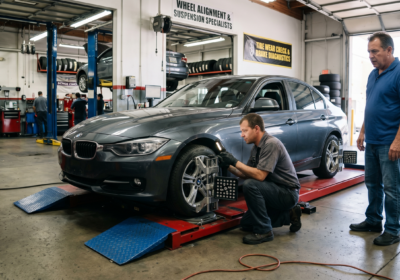
Tread depth matters as well. Worn or uneven tread can point to an alignment issue, improper inflation, or worn suspension components. Frank’s European Service offers tire, wheel, alignment, and suspension services for European vehicles in Las Vegas.
What Should Be Included in a Fall Brake Inspection?
Your brakes should respond smoothly, quietly, and predictably. If the pedal feels different, the vehicle pulls while stopping, or you hear grinding or squealing, the braking system should be inspected rather than monitored until the symptoms become worse.
A fall brake inspection may include checking:
- Brake pad thickness
- Rotor condition
- Brake fluid condition
- Calipers and related hardware
- Brake hoses and visible connections
- Anti-lock braking system warnings
- Changes in pedal feel
European vehicles may use electronic brake-wear sensors and advanced stability-control systems. A warning on the dashboard should be treated as useful information, not simply cleared without finding its cause.
Even when no warning light is present, worn pads or deteriorated fluid may still require attention. An inspection gives you a clearer picture of the system’s present condition and helps you plan service based on safety and urgency.
Why Is Battery Testing Important After a Las Vegas Summer?
Las Vegas heat is demanding on automotive batteries. A battery may survive the hottest part of summer but begin showing weakness when mornings become cooler. The first symptom may be slow cranking, intermittent warning messages, or electrical features behaving differently than usual.
European vehicles depend on stable voltage to support computers, sensors, safety systems, comfort features, and electronic modules. A battery may still start the engine while struggling to maintain the voltage these systems expect.
A battery and charging-system check can evaluate:
- Battery condition
- Available starting power
- Charging-system output
- Battery terminals and connections
- Signs of corrosion or damage
- Whether battery registration or programming is required
Some European vehicles require the replacement battery to be registered with the vehicle’s battery-management system. Installing the correct battery type and completing the proper procedures can help the charging system manage the new battery correctly.
Which Fluids Should You Check Before Fall?
Fluids do more than lubricate components. They can support cooling, braking, shifting, steering, cleaning, and temperature control. Fluid condition is often as important as the level.
Before fall, check the condition and level of:
- Engine oil
- Engine coolant
- Brake fluid
- Transmission fluid, where serviceable
- Power steering fluid, when applicable
- Windshield washer fluid
- Differential or transfer-case fluid when due
A low fluid level may indicate normal consumption, an overdue service, or a leak. Simply topping it off may hide the underlying problem. European vehicles can develop leaks around cooling-system connections, seals, hoses, reservoirs, oil-filter housings, and other components.
Following the correct fluid specification is especially important. European manufacturers may require specific oil approvals, coolant formulations, or transmission fluids. Using a fluid based only on color or general viscosity may not meet the vehicle’s requirements. Our preventive maintenance services are designed to help drivers follow the needs of their individual vehicles rather than using the same maintenance plan for every make and model.
Do Las Vegas Drivers Need to Inspect Wipers and Lights in Fall?
Yes. Fall can bring darker morning commutes, earlier sunsets, dust, and occasional rain. Clear visibility becomes more important as daylight hours change.
Inspect your wiper blades for:
- Cracking or splitting
- Skipping across the windshield
- Streaking
- Chattering
- Hardened rubber
- Areas the blades no longer clear
Las Vegas heat and sun exposure can dry out wiper-blade rubber even when the blades have not been used frequently.
Test the headlights, brake lights, turn signals, reverse lights, and license-plate lights. Many European vehicles display a warning when an exterior bulb or lighting circuit has a problem, but a visual check is still worthwhile.
Should You Test the Heater and Defroster Before Cooler Weather?
Waiting until the first cold morning to test the heater can leave you discovering a problem at an inconvenient time. Run the climate-control system before cooler weather settles in and confirm that the cabin warms properly. Also test the front and rear defrosters. The defrost system supports visibility by directing conditioned air toward the windshield and helping clear moisture or fog.
Weak heat, unusual odors, inconsistent airflow, or temperature differences between vents may be connected to:
- Low coolant
- A thermostat concern
- A heater-control problem
- A blend-door or actuator issue
- A clogged cabin air filter
- A climate-control fault
Because climate systems in European vehicles may be electronically controlled, proper testing can require more than checking whether the fan turns on.
How Do You Know Which Maintenance Your European Car Needs?
Your dashboard reminder is helpful, but it is only one part of the maintenance picture. Review the vehicle’s mileage, age, previous service records, manufacturer schedule, and current condition.
Depending on the vehicle, fall maintenance may involve:
- Engine oil and filter service
- Cabin or engine air-filter replacement
- Brake-fluid service
- Coolant service
- Spark plug replacement
- Drive-belt inspection
- Transmission service
- Differential or transfer-case maintenance
- Tire rotation or alignment
- Software-related checks
Frank’s European Service works with BMW, Mercedes-Benz, Audi, Volkswagen, MINI, Porsche, Jaguar, Land Rover, Volvo, Maserati, and other vehicles listed on our vehicles we service page.
Maintenance should be based on the vehicle in front of us. Two cars of the same model and year may need different attention because of mileage, driving habits, storage, previous repairs, and operating conditions.
What Happens During a Digital Vehicle Inspection?
A digital vehicle inspection gives you visual information about your car’s condition. At Frank’s European Service, our inspection process may include technician notes, photographs, observations, and recommendations delivered through a digital report.
This approach helps you:
- See what the technician sees
- Understand why a service is recommended
- Separate urgent needs from future maintenance
- Keep a record of the vehicle’s condition
- Make informed decisions without unnecessary pressure
Our digital process is intended to make automotive service easier to understand. Recommendations can be presented according to urgency so you can decide what needs attention now and what can be planned for a later visit.
Why Schedule Fall Maintenance Before a Warning Light Appears?
Preventive maintenance is not about replacing every component early. It is about checking the vehicle at sensible intervals and responding to evidence. A fall inspection may identify a weak battery, low tire pressure, worn brake pads, a small fluid leak, deteriorated wiper blades, or an approaching maintenance interval.
Addressing these concerns early can make scheduling and budgeting more manageable. At Frank’s European Service, we explain what we find and help drivers understand the condition of their vehicles. Our AutoTechIQ-certified approach begins with education and transparent digital inspections rather than simply presenting customers with a list of services.
Frequently Asked Questions
1. When should I prepare my European car for fall?
Schedule fall maintenance before temperatures begin changing consistently or before a long seasonal trip. Early preparation gives you time to address maintenance needs without waiting for a breakdown or dashboard warning.
2. Does a European car require special fall maintenance?
The basic categories are similar, but European vehicles may require manufacturer-specific fluids, diagnostic equipment, battery procedures, and maintenance intervals. The inspection should account for the exact make, model, engine, and service history.
3. Why does my tire-pressure light come on during cool mornings?
Tire pressure can decrease as the surrounding air becomes cooler. Check the pressure when the tires are cold and adjust it according to the vehicle manufacturer’s specification.
4. Can summer heat damage my car battery?
High heat can accelerate internal battery wear. A battery that worked during summer may reveal reduced capacity when cooler weather increases starting demands, making fall a useful time for testing.
5. Should I service my car even when no warning lights are on?
Yes. Many maintenance needs develop without immediately triggering a warning light. Physical inspections, measurements, fluid checks, and service-history reviews can reveal issues the dashboard does not monitor.
6. What European vehicles does Frank’s European Service maintain?
We service many European makes, including BMW, Mercedes-Benz, Audi, Volkswagen, MINI, Porsche, Jaguar, Land Rover, Volvo, Maserati, Fiat, Smart, and Maybach, along with selected hybrid, electric, Asian, and American vehicles.
Get Your European Car Ready for Fall
A seasonal inspection can help you enter fall with a clearer understanding of your tires, brakes, battery, fluids, climate system, and upcoming maintenance needs. At Frank’s European Service, we use European vehicle experience and digital inspections to give Las Vegas drivers clear information about what their cars need and why.
Schedule an appointment with Frank’s European Service to prepare your European car for fall weather.