



Driving should feel smooth, balanced, and effortless. But if your car drifts to one side while you’re cruising down the road, it’s more than just an annoyance; it’s a potential safety concern. At Frank’s European Service, we see this issue frequently, especially with our European car clients in Las Vegas and Henderson. In this blog, we’ll explain why your car might pull to one side, what it means for your alignment and suspension, and how our team ensures your vehicle stays safe, comfortable, and reliable.
Why Your Car Pulls to One Side
When your car doesn’t track straight, several factors could be at play. Most drivers first suspect uneven tire pressure, but the problem often runs deeper into your vehicle’s wheel alignment, suspension, or even braking system. Here’s what we typically check when a customer comes to us with a pulling issue:
1. Wheel Alignment Problems
Wheel alignment is one of the most common reasons a car pulls to one side. Over time, hitting potholes, curbs, or uneven roads can shift your wheels out of their ideal position. When your wheels aren’t perfectly aligned:
- One tire may lead while the other lags, causing a pull.
- Tire wear becomes uneven, reducing lifespan.
- Steering feels off-center, making driving less predictable.
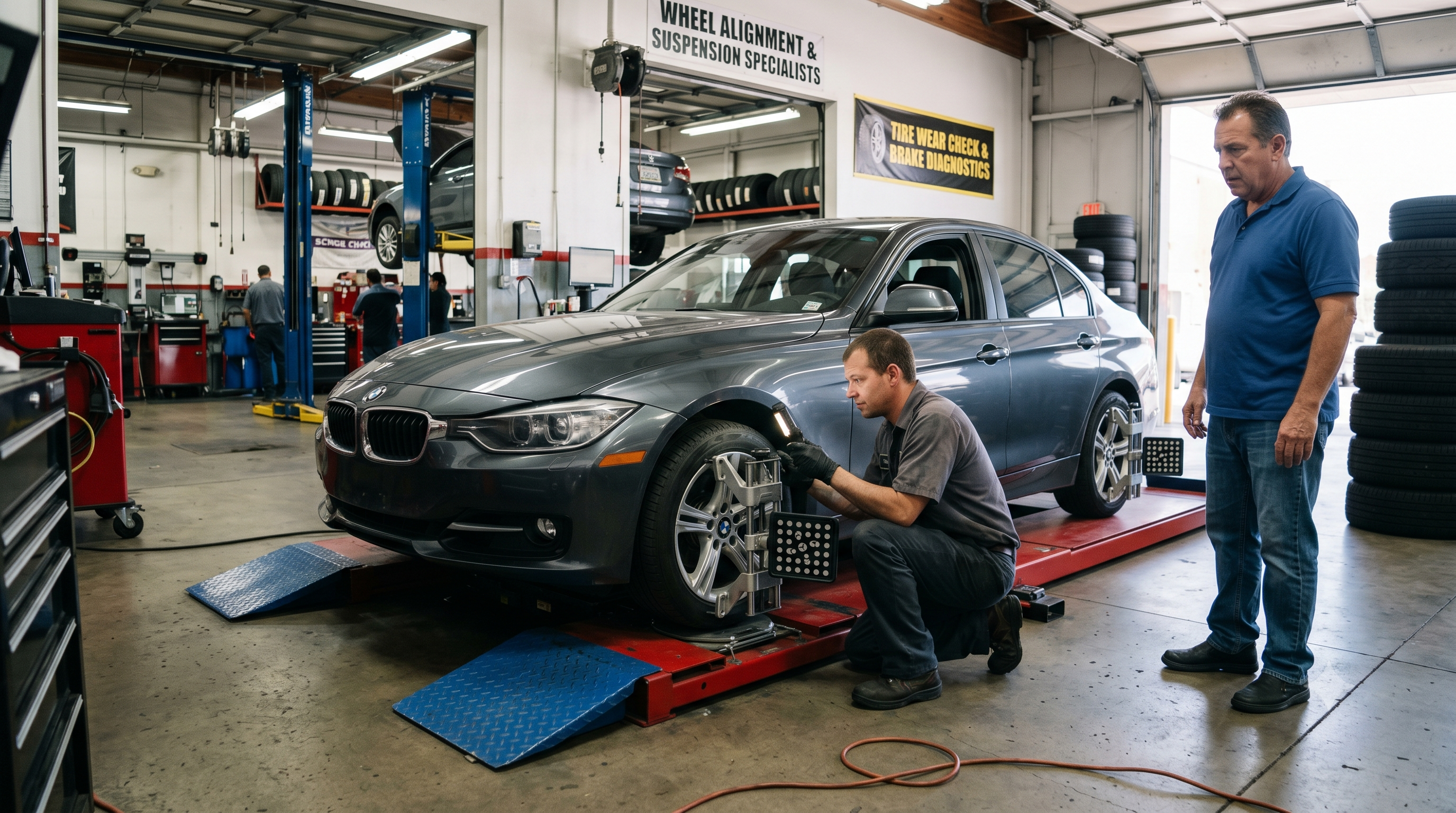
Our Approach at Frank’s: We use advanced alignment machines to measure every angle and ensure your wheels are perfectly set to manufacturer specifications. This is particularly important for European cars like BMW, Mercedes-Benz, and Audi, which have precise steering geometry.
2. Uneven Tire Pressure or Worn Tires
Even small differences in tire pressure can cause your car to drift. Worn tires or uneven tread patterns can also contribute to pulling. Tires on high-performance European vehicles often require exact specifications for inflation and rotation.
Tip: Always check your tires monthly and rotate them according to the manufacturer’s recommendations. At Frank’s European Service, we inspect tread depth, balance, and tire condition as part of every alignment service.
3. Suspension Wear and Tear
Your suspension system keeps your car’s weight balanced and ensures the tires remain in contact with the road. Components like shocks, struts, control arms, and bushings wear out over time, which can result in your vehicle pulling:
- Worn shocks or struts allow the car to lean to one side.
- Loose or damaged control arms cause uneven handling.
- Aging bushings affect wheel positioning and stability.
Our Method: During a suspension inspection, we examine every component for wear or damage. European cars often require specialized tools and expertise to maintain their precision handling, and our technicians are trained to address these exact needs.
4. Braking System Issues
Sometimes, a pulling sensation happens only when you brake. This could be due to:
- A sticking caliper
- Uneven brake pad wear
- Rotor warping
While alignment and suspension are often the culprits, it’s essential to check your brakes, especially if your vehicle pulls only under braking conditions. At Frank’s, we provide thorough brake diagnostics alongside suspension checks to catch any overlapping issues.
How Driving Habits and Road Conditions Affect Pulling
Las Vegas roads are no strangers to heat, potholes, and uneven surfaces. Over time, these conditions can affect your car’s alignment and suspension. High-performance European cars are especially sensitive due to their precise engineering:
- Aggressive cornering can stress suspension components.
- Repeated curb hits can misalign wheels.
- Hot weather may affect tire pressure, causing subtle drifts.
Preventive maintenance is key. Regular inspections help identify issues before they become major repairs.
Signs Your Car Needs Alignment or Suspension Service
Not all pulling issues are obvious. Here are some warning signs that your vehicle may need attention:
- Steering wheel off-center when driving straight
- Vehicle drifts to one side on level roads
- Uneven tire wear patterns
- Bouncing, swaying, or unusual vibrations
- Pulling only when braking or turning
Ignoring these signs can lead to uneven tire wear, decreased fuel efficiency, and increased risk of accidents. Our goal at Frank’s European Service is to keep your European car performing safely and smoothly.
What to Expect During an Alignment & Suspension Check at Frank’s
When you bring your vehicle to us, here’s the step-by-step process we follow:
- Comprehensive Inspection: We examine tires, steering, suspension, and brakes to pinpoint the cause of pulling.
- Wheel Alignment Testing: Using state-of-the-art alignment equipment, we measure camber, caster, and toe angles.
- Suspension Component Review: Shocks, struts, control arms, and bushings are checked for wear.
- Test Drive: A controlled test drive ensures your car drives straight and handles correctly.
- Detailed Report: We provide photos, videos, and clear explanations of any issues we find, along with prioritized recommendations.
- Service & Repairs: Depending on findings, we perform wheel alignment, suspension repairs, tire balancing, or brake adjustments.
By combining diagnostics with hands-on service, we make sure your vehicle’s handling is restored to its optimal state.
Maintenance Tips to Prevent Pulling Issues
- Regular Tire Care: Rotate, balance, and maintain proper tire pressure monthly.
- Suspension Inspections: Have your suspension checked at least once a year or if you notice handling changes.
- Avoid Potholes and Curbs: Minimize impacts that could misalign your wheels.
- Brake Maintenance: Inspect brake pads and rotors regularly.
- Seasonal Checkups: Schedule alignment and suspension inspections after winter or summer extremes for Las Vegas drivers.
Following these simple steps can prevent pulling issues and extend the life of your vehicle.
Frequently Asked Questions
Can misaligned wheels damage my tires?
Yes. Misalignment causes uneven tire wear, reducing lifespan and performance. Correcting alignment prevents premature tire damage.
How often should I check my alignment?
We recommend every 12,000–15,000 miles or after hitting a pothole or curb. European cars with high-performance tires may need more frequent checks.
Can worn suspension parts cause pulling even after alignment?
Absolutely. Alignment corrects wheel angles, but worn shocks, struts, or bushings can still make your car pull. Both alignment and suspension must be inspected together.
Why does my car pull only when braking?
This usually points to a brake issue like a sticking caliper or uneven rotor wear. We recommend a full brake inspection alongside alignment and suspension checks.
Can tire type affect pulling?
Yes. Mismatched tires or uneven tread patterns on performance European vehicles can cause pulling. Always ensure tires are the correct size and type.
Does temperature affect pulling?
Extreme heat in Las Vegas can change tire pressure, causing subtle pulls. Regular tire maintenance and seasonal checkups can prevent this.
Drive Straight and Confident
Your car should never pull unexpectedly while driving it affects safety, comfort, and efficiency. By addressing alignment and suspension issues early, you save money, prevent tire wear, and enjoy a smoother ride. At Frank’s European Service, we combine European car expertise, honest diagnostics, and friendly service to keep your vehicle handling as it was designed.